


An Allusion is:
a reference to history, literature, art, popular culture, etc. in the text that the author thinks that you would understand.
Chapter 1

King Harold II of England is defeated by the Norman forces of William the Conqueror at the Battle of Hastings, fought on Senlac Hill, seven miles from Hastings, England. At the end of the bloody, all-day battle, Harold was killed--shot in the eye with an arrow, according to legend--and his forces were destroyed. He was the last Anglo-Saxon king of England.

A flivver is an American slang term used during the early part of the 20th century to refer to a Model-T Ford.

Cornwall: a country at the southwest tip of England.
King Harold II of England is defeated by the Norman forces of William the Conqueror at the Battle of Hastings, fought on Senlac Hill, seven miles from Hastings, England. At the end of the bloody, all-day battle, Harold was killed--shot in the eye with an arrow, according to legend--and his forces were destroyed. He was the last Anglo-Saxon king of England.
Disturbance between the North and South: reference to the Civil War
Andrew Jackson: General of the War of 1812
Creeks up the Creek:
Battle of Hastings: a decisive battle in the Norman Conquests of England in 1066
Cornwall: a country at the southwest tip of England
Flivver: Model-T Ford
John Wesley (1702-1791): founder of the Methodist Church
Merlin: King Arthur’s advisor, prophet and magician
No money to buy it with: Great Depression
Nothing to fear but fear itself: President F. D. Roosevelt’s first Inaugural Address
Stumphole whiskey: bootleg whisky hidden in the holes of tree stumps
Chapter 2

Union Suit: one-piece underwear with a buttoned flap in the back.

Lorenzo Dow: (October 16, 1777 – February 2, 1834) was an eccentric itinerant American preacher, said to have preached to more people than any other preacher of his era.

Bulfinch's Mythology is a highly successful popularization of Greek mythology.
Union Suit: one-piece underwear with a buttoned flap in the back.
Bullfinch: Bulfinch’s Mythology, collection of Greek myths
Diaries of Lorenzo Dow (1777-1834) Methodist preacher
Union suit: one-piece underwear with a buttoned flap in the back
Chapter 3

Man who sat on a flagpole: flagpole sitting was a 1930s fad
Chapter 4

Indian Head Pennies.

One Man's Family: Radio's most popular and longest running national serial was One Man's Family, the sweeping saga of family life created by that great creator of radio drama, Carlton E. Morse.
Indian Head Pennies.
Indian-heads: Indian head pennies, before the Lincoln penny
One Man’s Family: a radio series, like a soap opera, began in 1932
Chapter 5

Second Battle of the Marne: In what began as the last major German offensive of the First World War, the Second Battle of the Marne developed into a significant Allied victory.

Pestilence is when a condition causes a lot of damage. This was seen in the Old Testament when the locusts came and many people contracted diseases from it.
Second Battle of the Marne: In what began as the last major German offensive of the First World War, the Second Battle of the Marne developed into a significant Allied victory.
Old Testament pestilence: condition that causes damage/death, plague of locusts in the Bible
Second Battle of the Marne: World War I battle
Chapter 8

On April 9, 1865, Confederate General Robert E. Lee surrendered his troops to Union General Ulysses S. Grant in the front parlor of Wilmer McLean's home in Appomattox Court House, Virginia, effectively ending the American Civil War (1861-65).

Lieutenant-General of the Confederate Army.

Thomas Jonathan "Stonewall" Jackson (January 21, 1824 – May 10, 1863) was a Confederate general during the American Civil War, and one of the best-known Confederate commanders after General Robert E. Lee.
On April 9, 1865, Confederate General Robert E. Lee surrendered his troops to Union General Ulysses S. Grant in the front parlor of Wilmer McLean's home in Appomattox Court House, Virginia, effectively ending the American Civil War (1861-65).
Appomattox: where General Lee surrendered to General Grant
Bellingraths: family gardens opened to the public in 1932
Lane cake: rich white cake
Rosetta Stone: three languages written on the stone in 196 BC , helped historians decipher Egyptian Hieroglyphs
General Hood: Lieutenant-General of the Confederate Army
House of Commons: lower branch of legislature in Great Britain
Let the cup pass from you: avoiding your fate
Lord Melbourne (1779-1848): Queen Victoria’s first Prime Minister, reputation for being a ladies’ man
Missouri Compromise (1820): Missouri admitted to the Union as a slave state
Ol’ Blue Light: Stonewall Jackson, Confederate lieutenant-general
Chapter 11

Dixie Howell played college football as a back at the University of Alabama from 1932 to 1934.

"Ivanhoe" is a historical novel by Sir Walter Scott published in 1820, and set in 12th-century England. It is sometimes credited for increasing interest in romance and medievalism.
Dixie Howell played college football as a back at the University of Alabama from 1932 to 1934.
Dixie Howell: University of Alabama football player in the 1930s
Ivanhoe: novel of the Crusades by Sir Walter Scott
Chapter 12

Commentaries on the Laws of England is an influential 18th-century treatise on the common law of England by Sir William Blackstone. The work is divided into four volumes, on the rights of persons, the rights of things, of private wrongs and of public wrongs.


The story in the Bible of Shadrach who was thrown into a blazing furnace but escaped unharmed because of his faith in God.
Commentaries on the Laws of England is an influential 18th-century treatise on the common law of England by Sir William Blackstone. The work is divided into four volumes, on the rights of persons, the rights of things, of private wrongs and of public wrongs.
Blackstone’s Commentaries: important book written on British law
Castile: type of soap
Garden of Gethsemane: where Jesus prayed the night before cruxifiction
Hunt’s The Light of the World: well-known painting of Jesus
Shadrach: in the Bible he was thrown into a blazing furnace but escaped unharmed because of his faith in God
Chapter 13

Maker/manufacturer of patent medicines that usually contained liberal amounts of alcohol.

Christian converts from third-world nations.
Maker/manufacturer of patent medicines that usually contained liberal amounts of alcohol.
Lydia E. Pinkham: maker/manufacturer of patent medicines, usually contained liberal amounts of alcohol
Rice Christians: Christian converts from third-world nations
Chapter 15

Low walls with open spaces on the top of a castle wall or fort.

Supports connected to a building by an arch.

A practical joke, like a wild goose chase.
Low walls with open spaces on the top of a castle wall or fort.
Battlement: low wall with open spaces on the top of a castle wall or fort
Flying buttresses: support connected to a building by an arch
Jitney Jungle: supermarket chain
Snipe hunt: practical joke, like a wild goose chase
Chapter 16


Commander of the Western Conference army with a less-than-distinguished military career.

William Jennings Bryan (1860-1925)-lawyer, politician, and famous orator who drew big crowds to his speeches.
Braxton Bragg: commander of Western Confederate army with a less-than-distinguished military career
William Jennings Bryan : (1860-1925) lawyer, politician, and famous orator, drew huge crowds
Roman Carnival: The Romans would gather and watch a Christian be slaughtered and torn to pieces by wild animals. They knew that the Christians had no chance of survival, and watched as entertainment. The would cheer when the Christian was torn to pieces.
Chapter 17

Shotgun hall: hallway that leads directly from the front door to the back door
Chapter 18

Mr. Jingle: character in Dicken’s novel who expresses himself in sentence fragments
Chapter 20


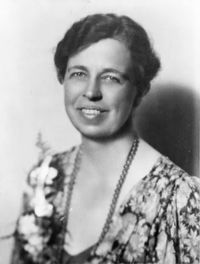
Distaff side of the Executive branch: reference to FDR’s wife Eleanor Roosevelt, often criticized for her views on civil rights
Einstein: Albert Einstein was a German-born theoretical physicist. He developed the general theory of relativity, one of the two pillars of modern physics. Einstein's work is also known for its influence on the philosophy of science.
Rockefeller: John Davison Rockefeller Sr. was an American business magnate and philanthropist. He was a co-founder of the Standard Oil Company, which dominated the oil industry and was the first great U.S. business trust.
Chapter 26

A journalist and CBS radio commentator who eventually headed the Office of War Information.

A member of a religious sect that expresses devotion by shouting and moving during worship service.

While not pictured here, Uncle Natchell Story is a cartoon mascot for a fertilizer product.
A journalist and CBS radio commentator who eventually headed the Office of War Information.
Elmer Davis: journalist and CBS radio commentator, eventually headed the Offic of War Information
Holy-roller: member of a religious sect that expresses devotion by shouting and moving during worship services
Uncle Natchell Story: cartoon mascot for a fertilizer product
Chapter 27

Robert Love Taylor was a late 19th Century orator and politician.

Orator and Republican politician, he drew support from rural voters and KKK members.

Latin for "To the stars through difficulties."
Robert Love Taylor was a late 19th Century orator and politician.
Bob Taylor: Robert Love Taylor, late 19th Century orator and politician
Ad Astra Per Aspera: Latin for “To the stars through difficulties”
Cotton Tom Heflin: orator and Republican politician, drew support from rural voters and KKK members
Dog Victrolas: advertising symbol of RCA/Victor, dog looking into horn of a gramophone
Ladies’ Law: law from Criminal Code of Alabama outlawing bad language in the presence of women
Nine old men: members of the Supreme Court
National Recovery Act (NRA)
programs to help the nation recover from the Great Depression
WPA: Work Progress Administrations, government program for employment during the Great Depression